Pad Thai
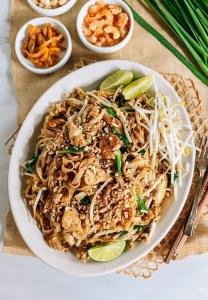
Pad Thai uses a focused method and clear seasoning for a reliable home-cooked result.
About This Recipe
Pad Thai benefits from measured seasoning and a clear cooking method.
Prepare the ingredients before starting so the final texture stays consistent.
Ingredients
- ✓1.5 ounces tamarind pulp ((plus ½ cup boiling water; or 6 tbsp/90ml tamarind concentrate))
- ✓3 tablespoons dark brown sugar ((or palm sugar, if you can find it))
- ✓3 tablespoons fish sauce
- ✓2 tablespoons Thai black soy sauce)
- ✓1 teaspoon Thai sweet soy sauce ((optional))
- ✓1/4 teaspoon white pepper ((to taste))
- ✓8 ounces dried Pad Thai rice noodles
- ✓8 ounces chicken breast ((thinly sliced))
- ✓1 teaspoon Thai thin soy sauce
- ✓1 teaspoon cornstarch
- ✓1 teaspoon water
- ✓1/4 cup dried shrimp ((small, medium, large, or XL size; minced or processed into a coarse powder))
- ✓3 cloves garlic ((sliced))
- ✓2 large shallots ((thinly sliced; can substitute red onion))
- ✓2 tablespoons preserved Thai salted radish (preferred) or Chinese mustard stem
- ✓3 large eggs ((beaten, preferably at room temperature))
- ✓2 cups mung bean sprouts ((washed and drained))
- ✓1 cup Chinese garlic chives ((cut into 1-inch pieces))
- ✓2 tablespoons roasted peanuts ((finely chopped))
- ✓6 tablespoons vegetable oil ((divided))
- ✓lime wedges ((for serving))
Ingredient Notes
- Protein: Use even pieces so they cook at the same speed.
- Seasoning: Season the surface before cooking.
- Heat control: Brown with enough heat, then finish gently if needed.
- Resting: Rest meat briefly before slicing or serving.
Instructions
- 1
First, make the sauce. Take the tamarind pulp (a block about 1 x 2 in (2.5 x 5 cm) and mix it with ½ cup boiling water (you can add a little more if needed to dissolve the paste). Break up the pulp in the hot water, and then press the mixture through a fine-meshed strainer. Discard the solids. To the liquid tamarind concentrate you just made, add the sugar, fish sauce, Thai black soy sauce, Thai sweet soy sauce (if using), and white pepper. Set aside.
- 2
Soak the pad thai noodles in hot water for about 20 minutes, and drain in a colander. If the noodles are in really long strands, you will want to cut them into 10- to 12-inch lengths to make stir-frying easier.
- 3
Marinate the sliced chicken by combining it with 1 teaspoon each of Thai thin soy sauce, cornstarch, and water. Set aside.
- 4
Next, prepare the dried shrimp, mincing them down into a coarse powder . Prepare the garlic, shallots/red onion, preserved salted radish or Chinese mustard stems (zha cai), eggs, mung bean sprouts, garlic chives, and peanuts. You want to have everything ready to go before you turn on the stove.
- 5
Now you’re ready to cook! Heat 2 tablespoons of oil in your wok over high heat until just smoking. Add the chicken, and sear until golden and just cooked through. Remove from the wok and set aside.
- 6
Add another 3 tablespoons of oil to the wok. Over medium heat, add the shrimp powder. Fry until fragrant and crisp, 2 minutes. Add the garlic, and cook for 30 seconds. Add the shallots and preserved salted radish (or zha cai). Stir-fry for another 30 seconds.
- 7
Turn the heat up to high, and add the noodles and sauce. Stir-fry to combine, lifting the noodles with your wok spatula to spread them out and break them up.
- 8
Make a space on the side of the wok, pushing the noodles to one side. Drizzle 1 more tablespoon of oil in the open space, and pour in the beaten eggs. Use your spatula to fold them gently, scrambling them without breaking up the egg too much. When the eggs are about 70% done, stir-fry to distribute them into the noodles.
- 9
Next, add the bean sprouts and the chives. Stir-fry to combine, letting the chives wilt. Add the chicken back in, and stir-fry to combine until everything is incorporated. Plate, top with the crushed peanuts, and serve!
Katy’s Kitchen Tips
- Prepare ingredients before starting.
- Season in layers as the dish cooks.
- Control heat so the texture stays pleasant.
- Taste and adjust before serving.
Variations and Substitutions
- Herb finish: Add parsley, cilantro, basil, dill, or chives.
- Spicier version: Increase chili, cayenne, black pepper, or hot sauce.
- Saucy version: Serve with gravy, salsa, pan sauce, or yogurt sauce.
- Meal prep: Use leftovers in bowls, wraps, salads, or sandwiches.
What to Serve With Pad Thai
Serve Pad Thai with jasmine rice, rice noodles, cucumber salad, lime wedges, and fresh basil.
Storage and Reheating
Refrigerate leftovers in an airtight container for up to 3 to 4 days.
Reheat gently so the center stays tender and the sauce does not dry out.
Common Mistakes to Avoid
- Rushing the method: Skipping steps can flatten flavor or texture.
- Too much heat: High heat can brown the outside before the center is ready.
- Underseasoning: Taste and adjust before serving.
- Serving too late: Many dishes taste best soon after finishing.
FAQ
Can I make Pad Thai ahead?
Yes. Prep or cook ahead, then reheat gently or finish close to serving.
How do I know it is done?
Use the time range plus a thermometer or the doneness sign in the method.
Can I change the seasoning?
Yes. Adjust herbs, spices, heat, or sauce to match your meal.
How should I store leftovers?
Keep leftovers airtight in the refrigerator and reheat gently.
Nutrition Facts
- Calories: 698 kcal
- Carbohydrates: 74 g
- Cholesterol: 384 mg
- Fiber: 4 g
- Protein: 39 g
- Sodium: 934 mg
- Sugar: 20 g
- Fat: 29 g
- Saturated Fat: 19 g